How Storage and Maintenance Requirements for Training Aircraft Are Changing Under Rising Operating Costs?
Flight training has always depended on a careful balance between safety, availability, and cost. A training aircraft is not just a machine used for transportation. It is a working instructional asset that may fly multiple times a day, be handled by pilots at different skill levels, and operate under repeated cycles of wear that are very different from private recreational use. For that reason, the storage and maintenance of training aircraft have always mattered. What is changing now is the level of pressure surrounding those decisions.
As operating costs continue to rise, flight schools and training operators are being pushed to rethink how they store, inspect, maintain, and schedule their aircraft. Fuel is only one part of the story. Hangar space, labor, parts availability, insurance, downtime, corrosion prevention, documentation, and fleet planning all affect the economics of training operations. Under these conditions, storage and maintenance are no longer just technical support functions. They are becoming central operational strategies that influence whether a training program remains efficient, competitive, and safe.
Training Aircraft Face a Different Kind of Wear
Training aircraft live harder lives than many privately owned planes. They are used repeatedly throughout the day, often by students who are still developing smooth handling habits. That means more takeoffs and landings, more taxi cycles, more braking events, more control input variability, and more strain on airframes, tires, brakes, interiors, and systems.
This intensive use changes how operators think about maintenance. In the past, some organizations could rely more heavily on routine intervals and fixed inspection patterns. Today, that approach is often not enough on its own. Training fleets increasingly require maintenance planning that reflects actual operational stress, not just standard calendar or hourly requirements. A plane used intensively for pattern work may need attention in ways that differ from an aircraft accumulating the same hours through smoother cross-country flying.
As a result, storage and maintenance decisions are becoming more closely linked to the real rhythm of the training environment.
Storage Is No Longer Just About Protection From Weather
Traditionally, aircraft storage was often discussed in simple terms: keep the airplane protected from sun, moisture, wind, temperature swings, and contamination. Those goals remain important, but rising operating costs have expanded the meaning of storage. Now it is also about preserving aircraft value, reducing avoidable maintenance, minimizing downtime, and improving workflow efficiency.
A training aircraft stored poorly may not show immediate dramatic damage, but the long-term cost can be significant. Exposure to heat, humidity, dust, UV degradation, and moisture can accelerate wear on paint, seals, windows, interiors, avionics, tires, and metal surfaces. Even small forms of deterioration create downstream expenses. In a cost-sensitive environment, operators can no longer afford to treat storage as a passive background issue.
That is why storage is increasingly evaluated in terms of operational return. The question is no longer only, “Is the aircraft under cover?” The question is also, “Does the storage setup reduce maintenance frequency, improve readiness, and help preserve the fleet over time?”
Hangar Space Has Become a Strategic Resource
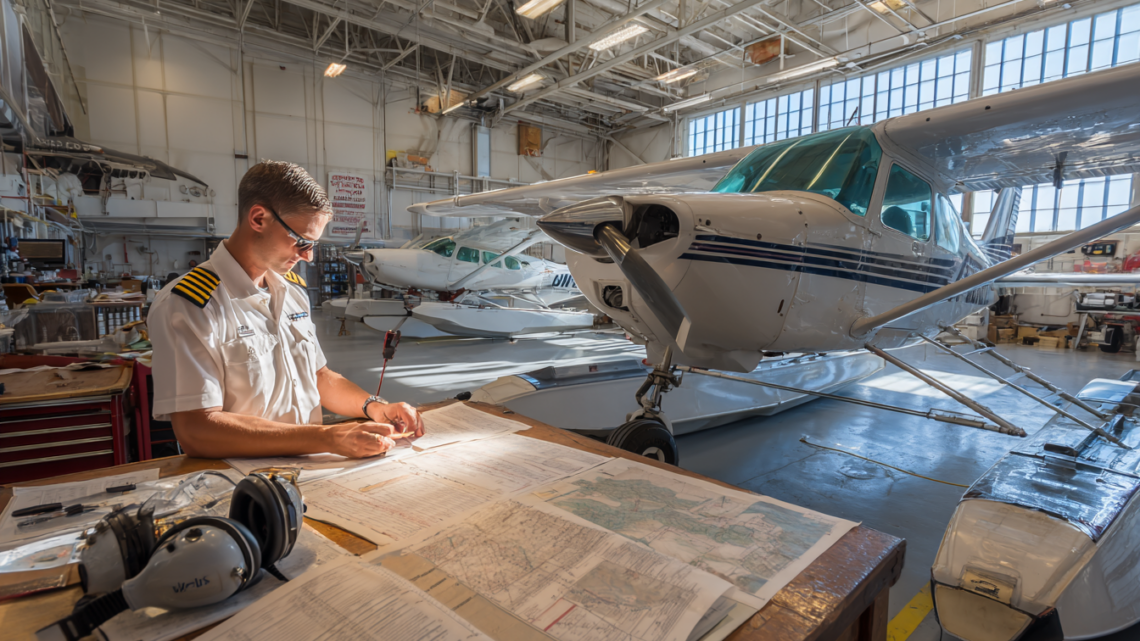
One of the clearest changes is that hangar space is being treated more strategically. For training operators, indoor storage is valuable not only because it protects aircraft, but because it can reduce cleaning time, improve morning readiness, support maintenance access, and limit environmental stress that later turns into repair cost.
But hangar space itself is expensive. That creates a difficult trade-off. Schools cannot always afford to place every aircraft under full protection, especially when fleets grow or regional infrastructure is limited. This means operators must make more selective decisions about fleet placement and storage hierarchy.
Some increasingly common priorities include:
- giving the most intensively used aircraft the most protected storage
- rotating aircraft to balance exposure
- aligning hangar placement with daily dispatch schedules
- storing maintenance-sensitive aircraft closer to support zones
- using layout planning to reduce movement inefficiency inside the hangar
In other words, storage is becoming part of fleet management rather than just a shelter decision.
Maintenance Is Shifting From Reactive to Preventive Efficiency
In any aviation environment, reactive maintenance is expensive. In a flight school environment, it is even more disruptive because one grounded aircraft can affect lessons, instructor schedules, student progress, and revenue flow across the day. Under rising costs, this makes preventive maintenance even more valuable.
The goal is not simply to inspect more often. It is to prevent small issues from becoming expensive interruptions. A loose interior component, worn tire, corrosion point, drainage issue, battery weakness, or minor seal deterioration may seem manageable in isolation, but in a high-use training fleet, these issues can quickly compound into unscheduled downtime.
This is why maintenance culture is changing. More operators are focusing on early detection, tighter routine checks, better communication between instructors and maintenance personnel, and more disciplined reporting of small abnormalities.
The most effective approach is not maintenance for its own sake, but maintenance that protects continuity of operations.
Documentation and Tracking Matter More Than Before
Rising costs have also made record quality more important. In a busy training operation, poor tracking leads to duplicated work, delayed parts ordering, missed patterns of wear, and reduced visibility into which aircraft are becoming costlier to operate.
Good documentation helps answer critical questions:
- Which aircraft are generating recurring maintenance issues?
- Which components are wearing faster under training use?
- Are some storage conditions linked to higher maintenance frequency?
- Which planes create the most unscheduled downtime?
- Where are hidden operating costs accumulating?
When margins tighten, these questions become operationally important. A flight school that treats maintenance records only as a compliance requirement may miss opportunities to make smarter fleet decisions. Accurate tracking turns maintenance into a source of operational intelligence.
Parts, Labor, and Downtime Are Reshaping Planning
Another major shift is that maintenance requirements are now being shaped by broader market pressures. Parts delays, technician shortages, labor costs, and scheduling bottlenecks mean that even straightforward repairs can keep an aircraft unavailable longer than expected.
That changes how schools think about service readiness. It is no longer enough to respond when something breaks. Operators increasingly need contingency thinking. They must plan around parts lead times, technician access, seasonal workload peaks, and the possibility that a minor issue may have a longer operational impact than it would have in the past.
This pushes schools toward stronger planning in areas such as:
- maintaining critical spare inventory where possible
- coordinating maintenance windows around training demand
- identifying common fleet vulnerabilities in advance
- reducing avoidable wear through better ground handling and storage
- building more realistic aircraft availability assumptions into schedules
In short, rising costs are making maintenance a planning function, not just a repair function.
Student Operations Also Affect Maintenance Economics
An important but often underestimated factor is the student side of the equation. Training fleets are shaped not only by engineering decisions but by how aircraft are used in practice. Harsh braking, rough landings, excessive control input, poor taxi discipline, and inconsistent post-flight reporting all increase maintenance pressure.
For that reason, some of the most cost-effective changes are cultural, not mechanical. Schools that teach students to treat aircraft care as part of pilot discipline may reduce unnecessary wear without compromising training quality. The same applies to instructors. The more consistently they model accurate reporting and careful aircraft handling, the better the fleet performs over time.
This creates an important insight: rising operating costs are changing not only technical requirements, but also behavioral expectations across the training environment.
Safety Standards Are Not Falling, but Efficiency Standards Are Rising
It is important to be clear about one point: rising costs do not reduce the importance of safety. If anything, they make disciplined safety management even more important because the temptation to delay non-urgent work or stretch operational decisions becomes more dangerous in a financially pressured environment.
What is changing is not the safety standard itself, but the expectation of efficiency around it. Operators are under greater pressure to protect safety while using storage space better, reducing unnecessary deterioration, improving maintenance timing, and preventing downtime that destabilizes the training calendar.
This means the strongest training organizations are no longer the ones that simply maintain aircraft well in the traditional sense. They are the ones that connect storage, maintenance, scheduling, reporting, and fleet usage into one coherent operating model.
Storage and Maintenance Are Now Part of the Training Business Model
The larger shift is that aircraft storage and maintenance can no longer be treated as background support for flight training. They are now part of the business model of a flight school. Every storage decision influences wear. Every maintenance delay affects utilization. Every preventable issue changes cost per training hour. Every hour of downtime affects students, instructors, and scheduling.
In that environment, the future belongs to training operators who think beyond simple compliance. They will treat aircraft preservation as a strategic asset, maintenance as a predictive discipline, and storage as an active tool for controlling long-term cost.
Rising operating expenses are forcing flight schools to become more deliberate, not less. And in that sense, the new requirements are not only about spending more carefully. They are about understanding that the condition of a training fleet is shaped every day, long before the next inspection begins.